MORE WORK
MORE WORK
MORE WORK
MORE WORK
MORE WORK
MORE WORK
MORE WORK

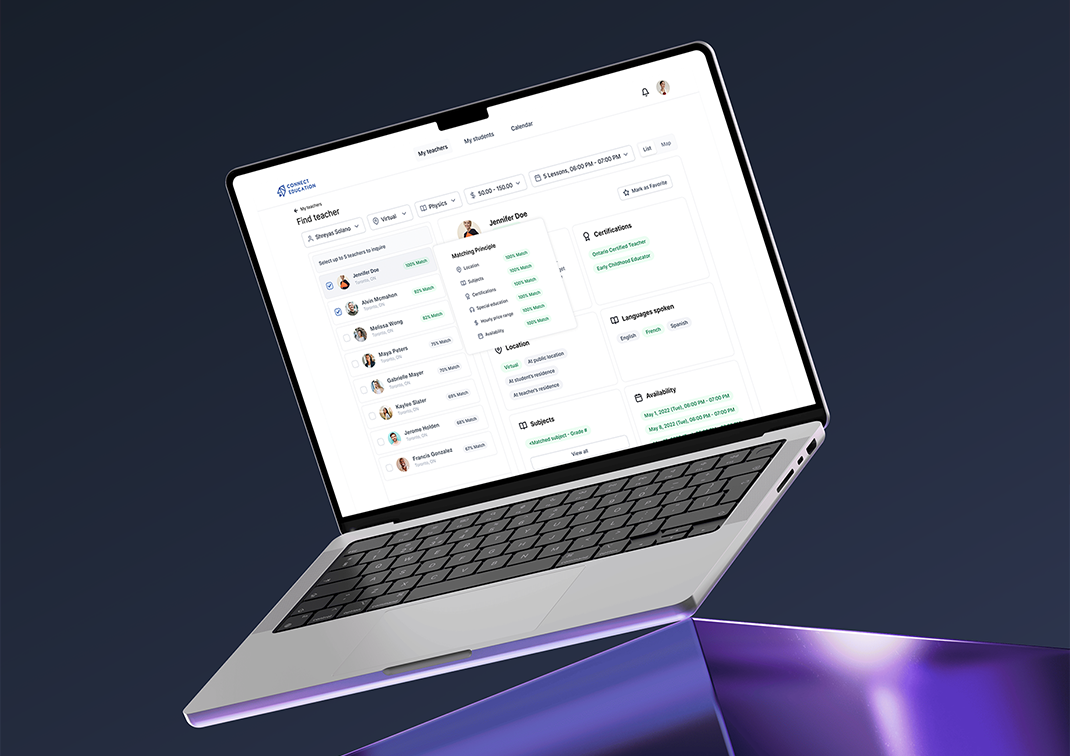
To optimize the educational experience for teachers and parents, create a comprehensive digital ecosystem that seamlessly integrates learning management, communication tools, and resource sharing across web and mobile platforms.
Client
Connect Education
Year
June - September 2023
Category
Product Design
SaaS Platform
LMS System
·
Sole UI/UX designer on the team, collaborating closely with 2 full-stack developers, a PM, marketing, and the CEO to redesign the platform from beta to a fully tested product
·
Owned end-to-end UI design and prototyping, translating stakeholder requirements and user feedback into intuitive, production-ready interfaces
·
Worked directly with developers throughout implementation, ensuring design accuracy and consistency across web and mobile

The beta platform made it difficult for parents and tutors to book, cancel, and reschedule lessons independently — creating friction at one of the most frequent touchpoints in the product.
Traditional schools often lack the resources to support children with special needs such as ADHD. Parents had no easy way to find qualified, personalised one-on-one tutoring outside the school system.
Parents had no structured way to match with tutors based on their child's specific needs, location, budget, and availability — making the search process time-consuming and unreliable.

Research for this project was gathered through a mix of primary and secondary sources. I conducted in-person interviews with one tutor and one parent to understand their day-to-day pain points with the beta platform. Additional insights came directly from the CEO, who gathered feedback from end users at industry conferences and through direct contact with families. I also conducted competitor research across the US and Canadian market to identify gaps and opportunities, which informed the redesign direction and new feature priorities.
I conducted in-person interviews with one tutor and one parent to understand their direct experience with the beta platform. Given the early stage of the product, research was supplemented by stakeholder input from the CEO, who gathered feedback from end users at industry conferences and through direct outreach to families.
Primary objective — Understand the real pain points tutors and parents experienced with booking, scheduling, and communication on the existing platform.
Secondary— Identify unmet needs around tutor discovery and matching, particularly for families seeking support for children with special needs.
Intelligent Tutor Matching
Build a matching system that connects parents with the right tutor based on subject, location, availability, price, and special education needs — removing the guesswork from the search process.
Frictionless Lesson Management
Redesign the booking, rescheduling, and cancellation flow so both parents and tutors can manage lessons independently without confusion or unnecessary steps.
Accessible Across All Devices
Optimise the platform for mobile so parents and tutors can manage their schedules, communicate, and access the platform seamlessly on any device.
Research insights from tutor and parent interviews, stakeholder feedback, and competitor research that directly shaped the redesign decisions.
1
Interviews with tutors revealed that relying on admin support to manage lessons created delays and frustration. Tutors needed the ability to schedule, reschedule, and cancel sessions independently — without waiting on back-and-forth communication.
2
Interviews revealed that parents — especially those with children with special needs — needed more than just a list of tutors. They needed transparency around qualifications, special education experience, and availability to make a confident decision. This shaped the matching system and tutor profile design.
3
Users were accessing the platform on mobile but the beta had poor responsiveness, limiting usability. This made responsive design a core priority across the redesign, not an afterthought.
TO INFORM
Give parents, tutors, and students a clear, real-time view of their lessons, schedules, and tutor matches — so everyone knows exactly where they stand at any point in the learning journey.
TO ENGAGE
Create a platform experience that builds trust between parents and tutors through transparent matching, clear communication tools, and a seamless booking process that keeps both sides coming back.
TO GUIDE
Help parents quickly find and connect with the right tutor for their child's specific needs — whether that's subject expertise, special education experience, or location — with as little friction as possible.
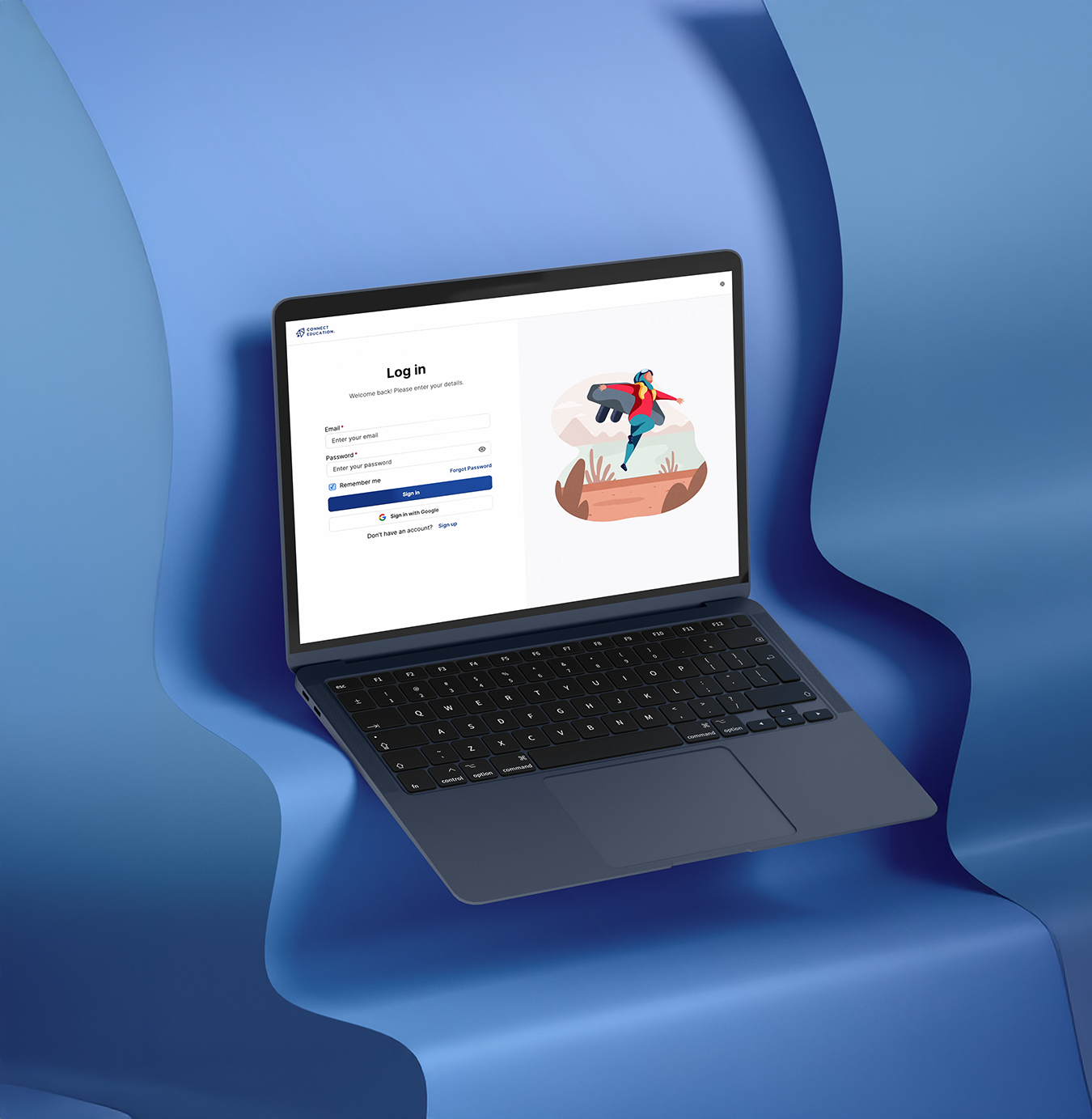
We followed a Lean UX and Agile methodology — combining continuous user feedback and rapid iteration cycles with structured sprint planning to ship improvements consistently throughout the project.

Redesigned from the beta version — June 2023
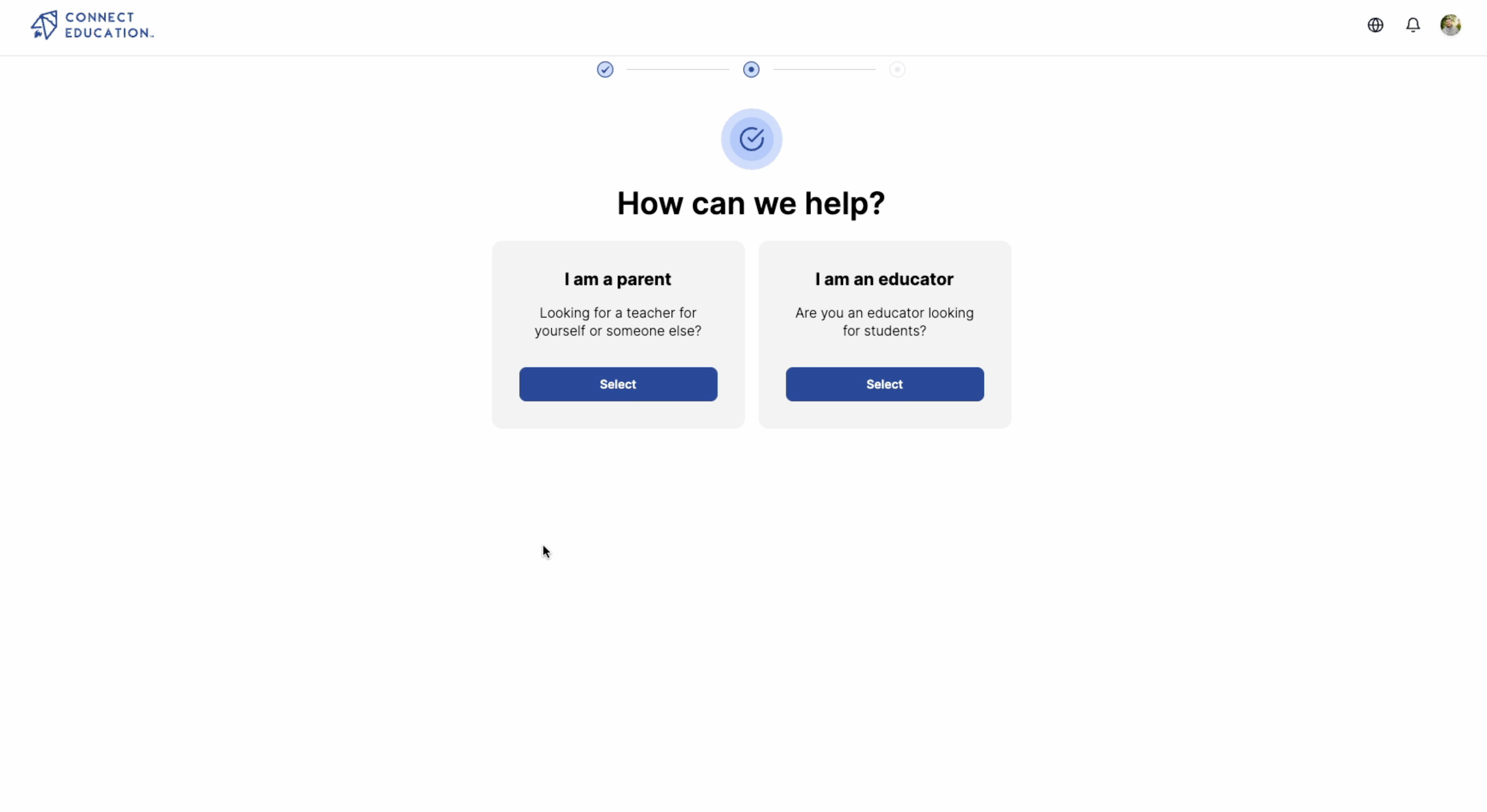
The original beta launched without usability testing, leaving users with confusing flows and poor mobile responsiveness across all three user roles. The redesign focused on creating a clear, role-specific experience from the moment a user signs up.
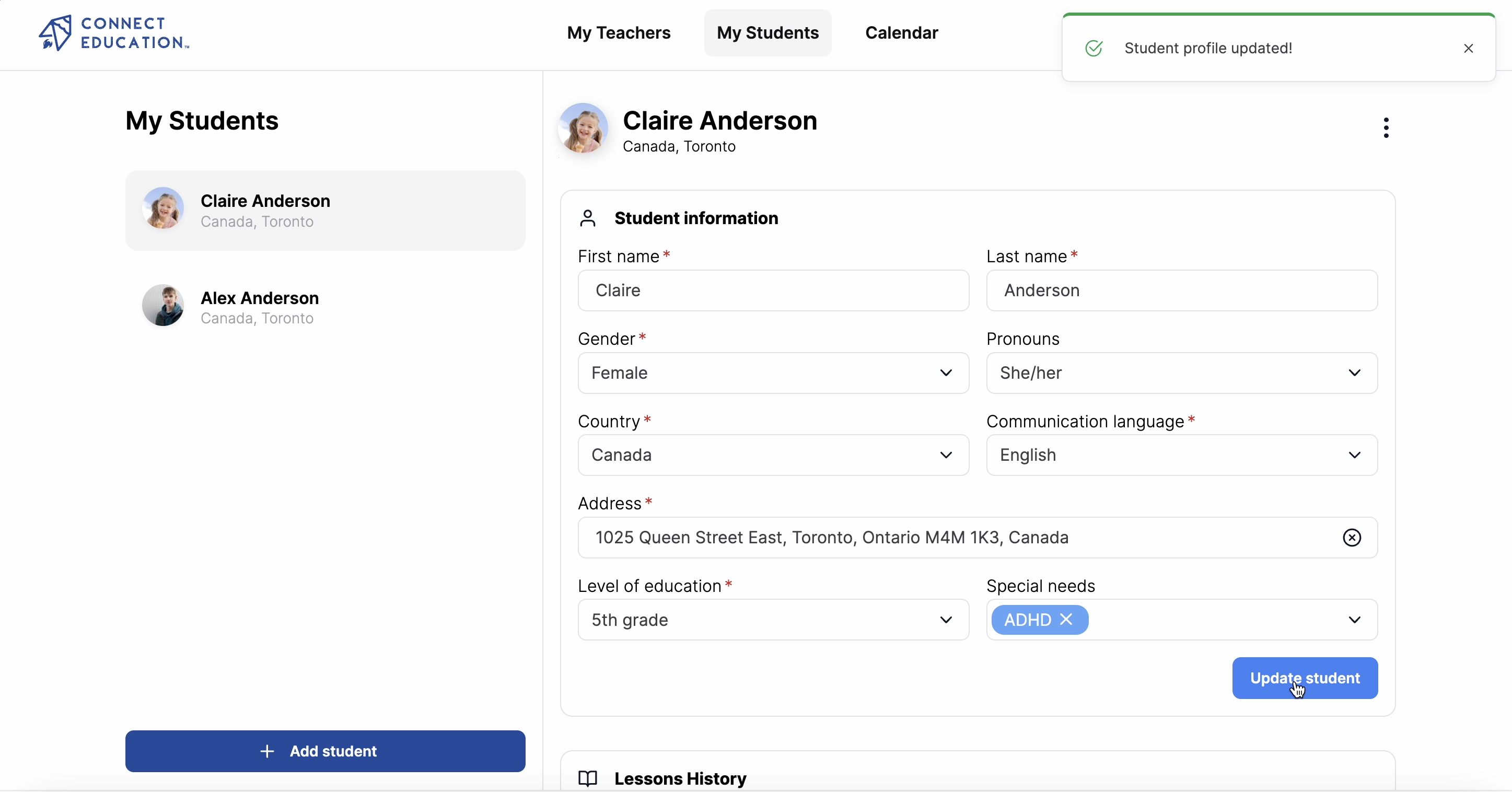
Each user type — parent or educator — is routed into a tailored onboarding flow that captures the information most relevant to them, including special needs requirements for students, which the beta had no way to accommodate.
The redesign prioritised simplicity, responsive layouts, and reducing the number of steps needed to complete core tasks like booking lessons and finding the right tutor.
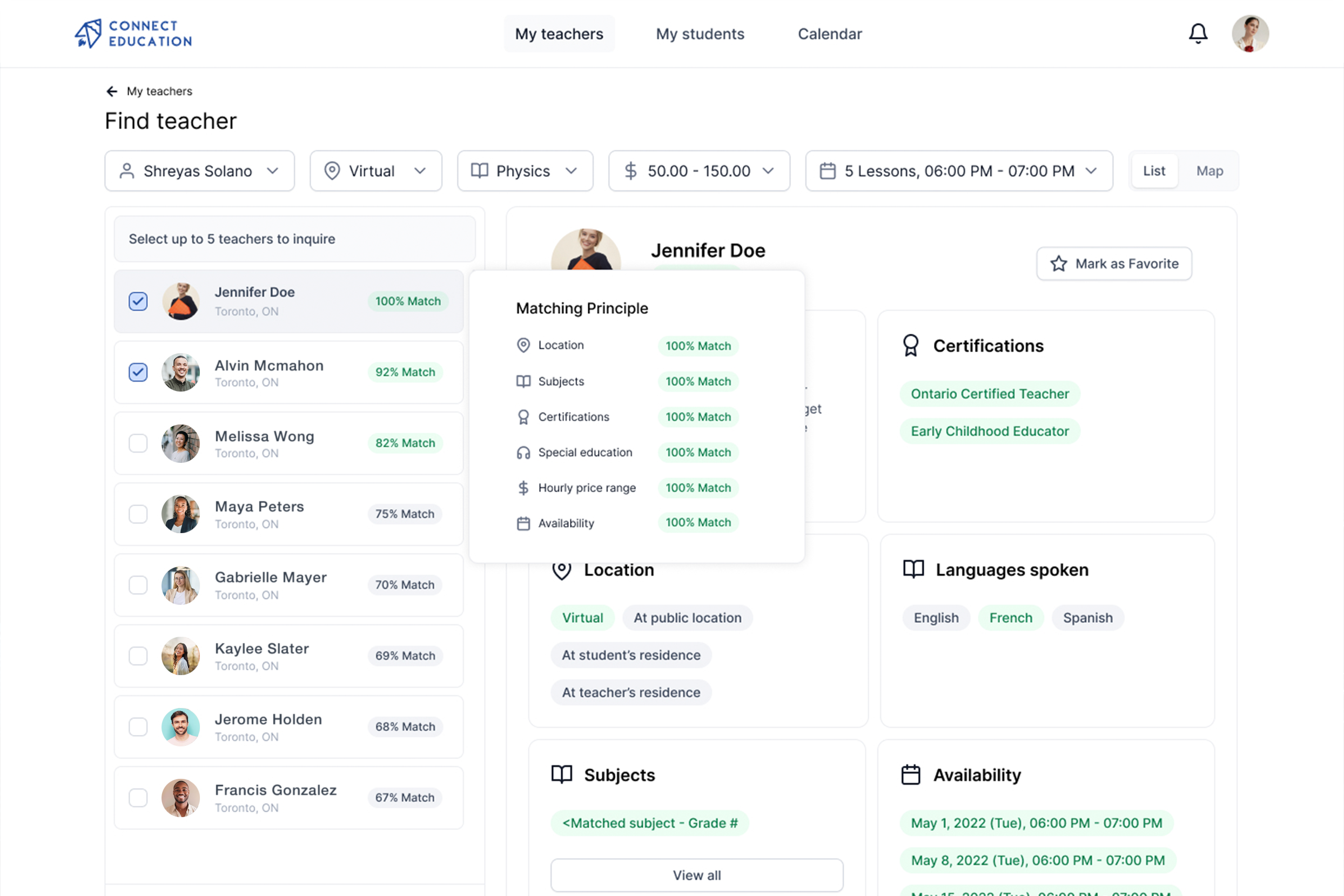
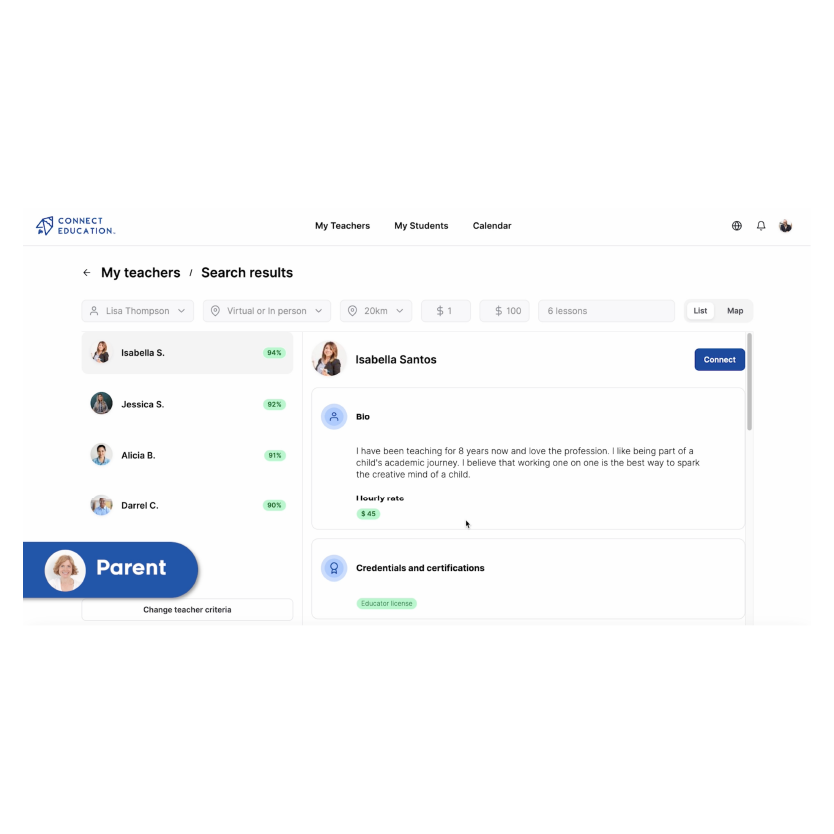
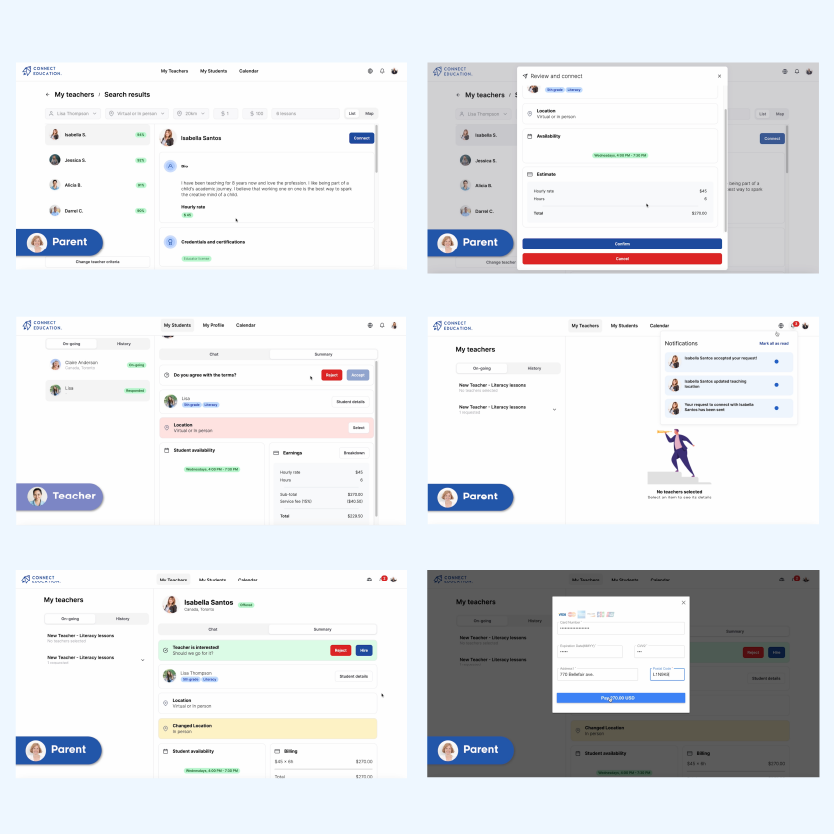
The core challenge was helping parents — especially those with children with special needs — find the right tutor quickly and confidently, without having to manually contact multiple educators and wait for responses.
Parents can filter tutors by subject, location, price, availability, and special education needs in a single search
Transparent match scores give parents confidence in their choice without requiring back-and-forth communication
Tutors with special education certifications like ADHD support are surfaced directly in search results
The connect-to-hire flow reduced the steps between finding a tutor and booking the first lesson
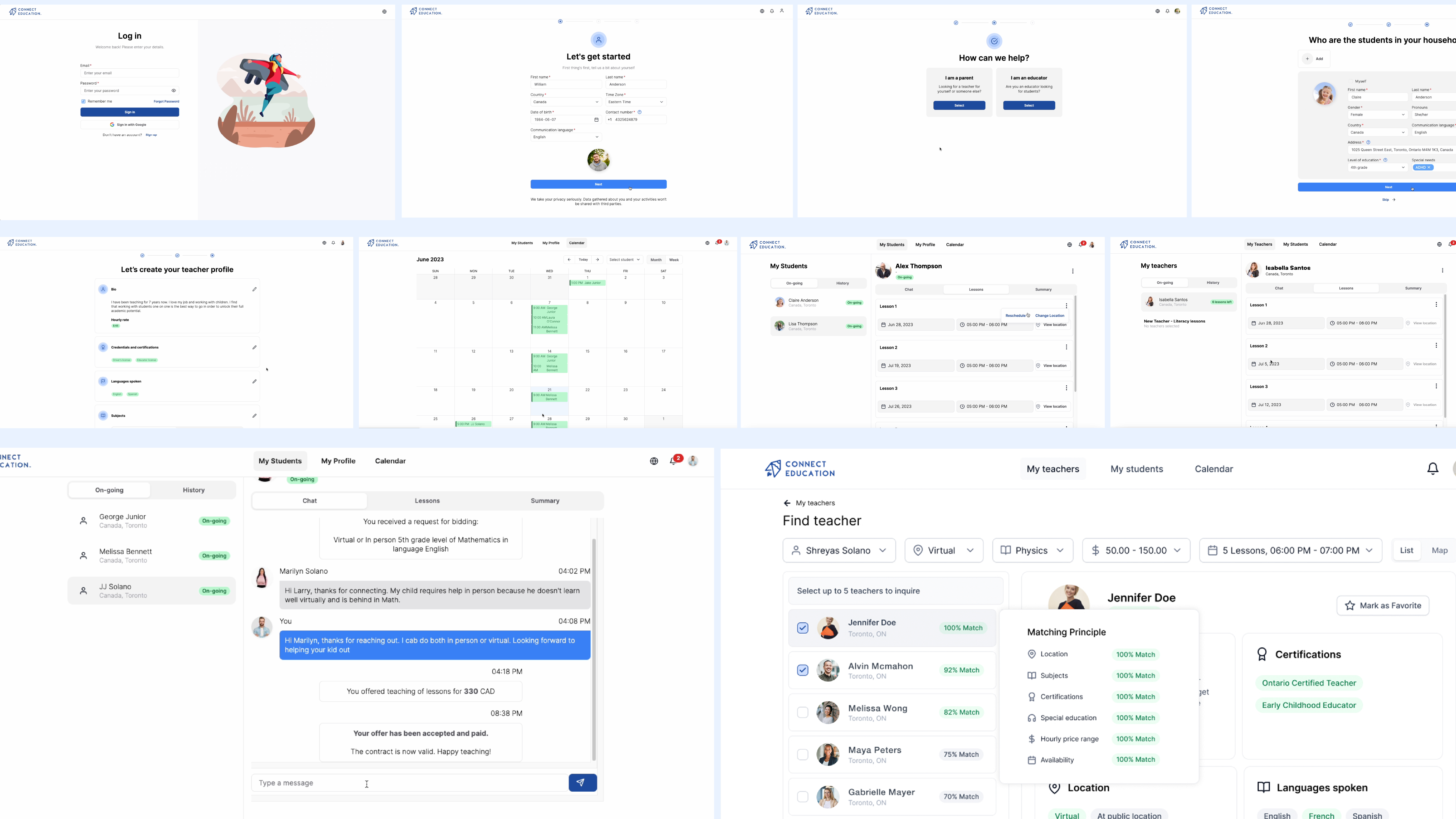
1. Step-by-step onboarding instead of one long form
Breaking the sign-up flow into stages reduced cognitive load and drop-off, letting users complete their profile at their own pace with a save function between steps.
2. Role-based navigation from the start
Separating the parent and educator journeys immediately after sign-up ensured each user only saw what was relevant to them — reducing confusion from the beta's one-size-fits-all approach.
3. Matching score displayed transparently
Connected Microsoft Dynamics 365 to surface real-time inventory and tier-based pricing directly on the product page, reducing cart abandonment and speeding up purchase decisions.
4. Billing and lessons on the same page
Keeping the billing summary on the same screen as lesson details meant parents could review costs and schedule in one place, removing the need to navigate between separate sections.
Tutor Matching
AI-powered matching connects parents with the most suitable tutors based on subject, location, price, availability, and special education needs.
Lesson Booking & Rescheduling
Parents and tutors can independently book, reschedule, and cancel lessons without going through admin, with billing calculated automatically.
In-app Messaging
Direct chat between parents and tutors with built-in bidding, offer acceptance, and payment confirmation all within the same conversation thread.
Mobile Calendar
A responsive calendar with list and grid view options lets both parents and tutors manage their schedules on any device.
Student Profiles
Parents can create and manage profiles for multiple students, including grade level, special needs, and communication language to inform tutor matching.
PROBLEM
Parents had no structured way to find tutors that matched their child's specific needs. The beta had no matching system — parents had to manually browse profiles with no way to filter by special education needs, location radius, or availability, making the process time-consuming and unreliable.
Design Decision
I designed a matching system that surfaces tutors ranked by a multi-factor score — covering location, subjects, certifications, special education experience, hourly rate, and availability — all based on answers collected during the parent onboarding flow. The full matching breakdown is shown transparently on each tutor's profile so parents understand why a tutor was recommended. The connect-to-hire flow was designed to keep the entire process — from finding a tutor to paying for lessons — within a single streamlined journey.
Outcome
Parents could now find and hire a qualified tutor in one flow without back-and-forth emails or admin involvement. Children with special needs like ADHD had a direct path to tutors with the right certifications — something the beta had no way to support at all.
1
Designing for multiple user roles in the same platform requires constant context-switching — every decision I made for the parent flow had to be checked against how it affected the tutor side, and vice versa. This project taught me to always design with the full ecosystem in mind.
2
Working without formal usability testing data from the start meant the beta launched with real friction points that could have been caught earlier. It reinforced for me how important it is to advocate for research and testing before launch, not just after problems emerge.
3
Collaborating closely with developers in an Agile environment made me a stronger designer — learning to scope designs within sprint cycles, communicate constraints clearly, and prioritise what could ship versus what needed more iteration.