MORE WORK
MORE WORK
MORE WORK
MORE WORK
MORE WORK
MORE WORK
MORE WORK

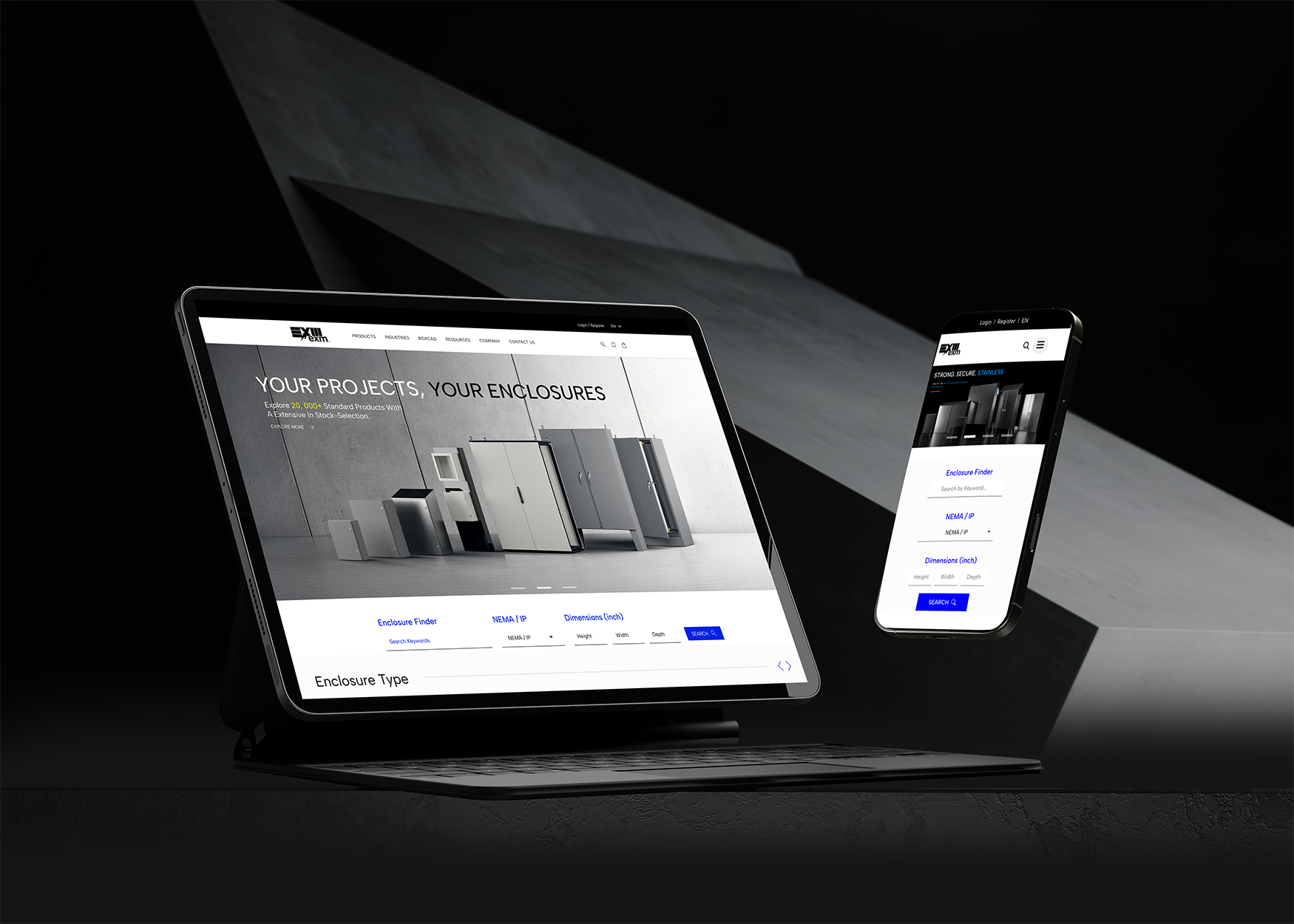
EXM Manufacturing needed a modern e-commerce experience for both B2B and B2C users. I led the UX/UI redesign and information architecture overhaul to improve navigation, product discovery, SEO, and conversion across 4,000+ industrial products, resulting in a refreshed platform launched in March 2026.
Client
EXM Manufacturing Ltd.
Year
January 2024 - March 2026
Category
E-commerce Development
SEO Optimization
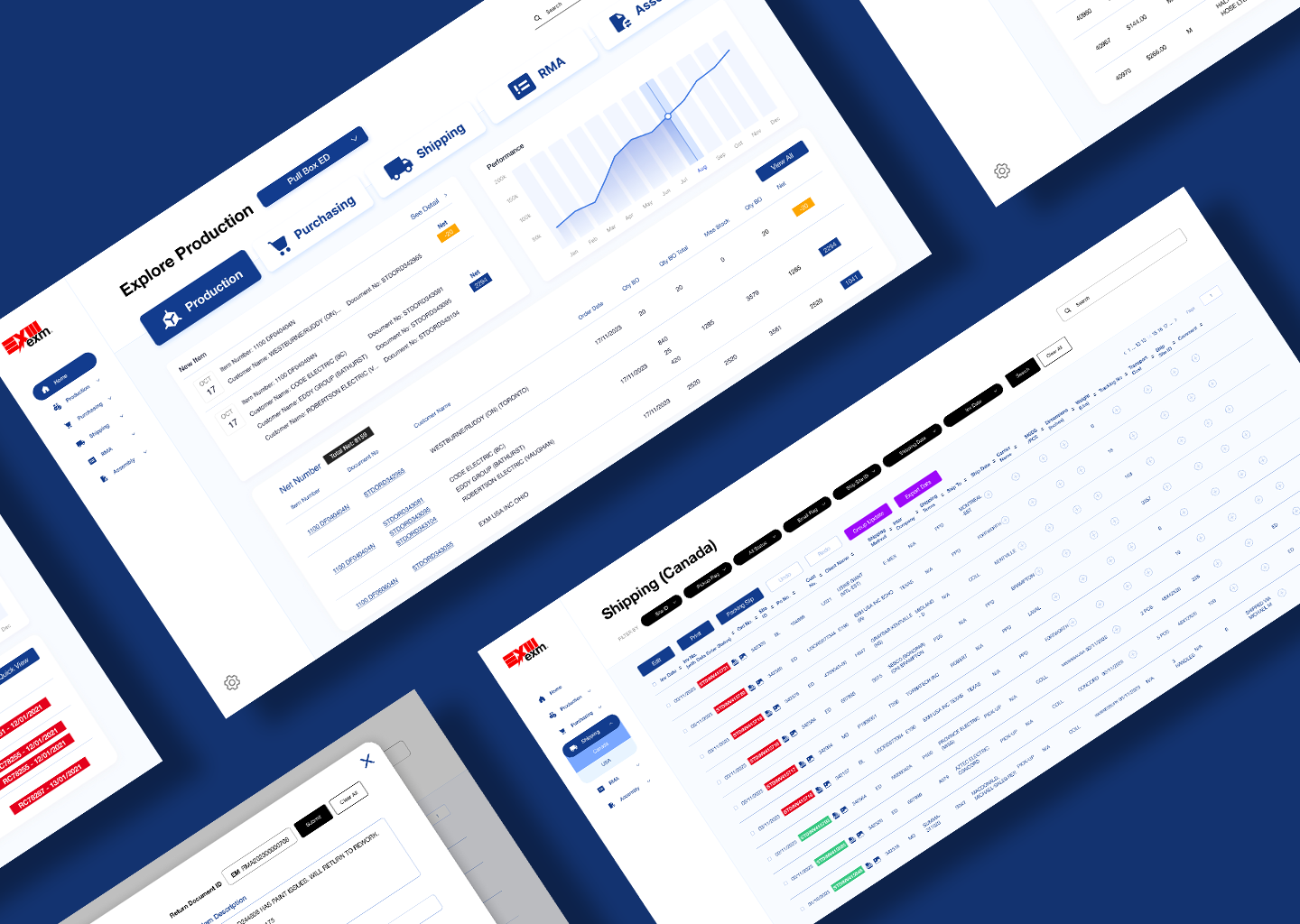
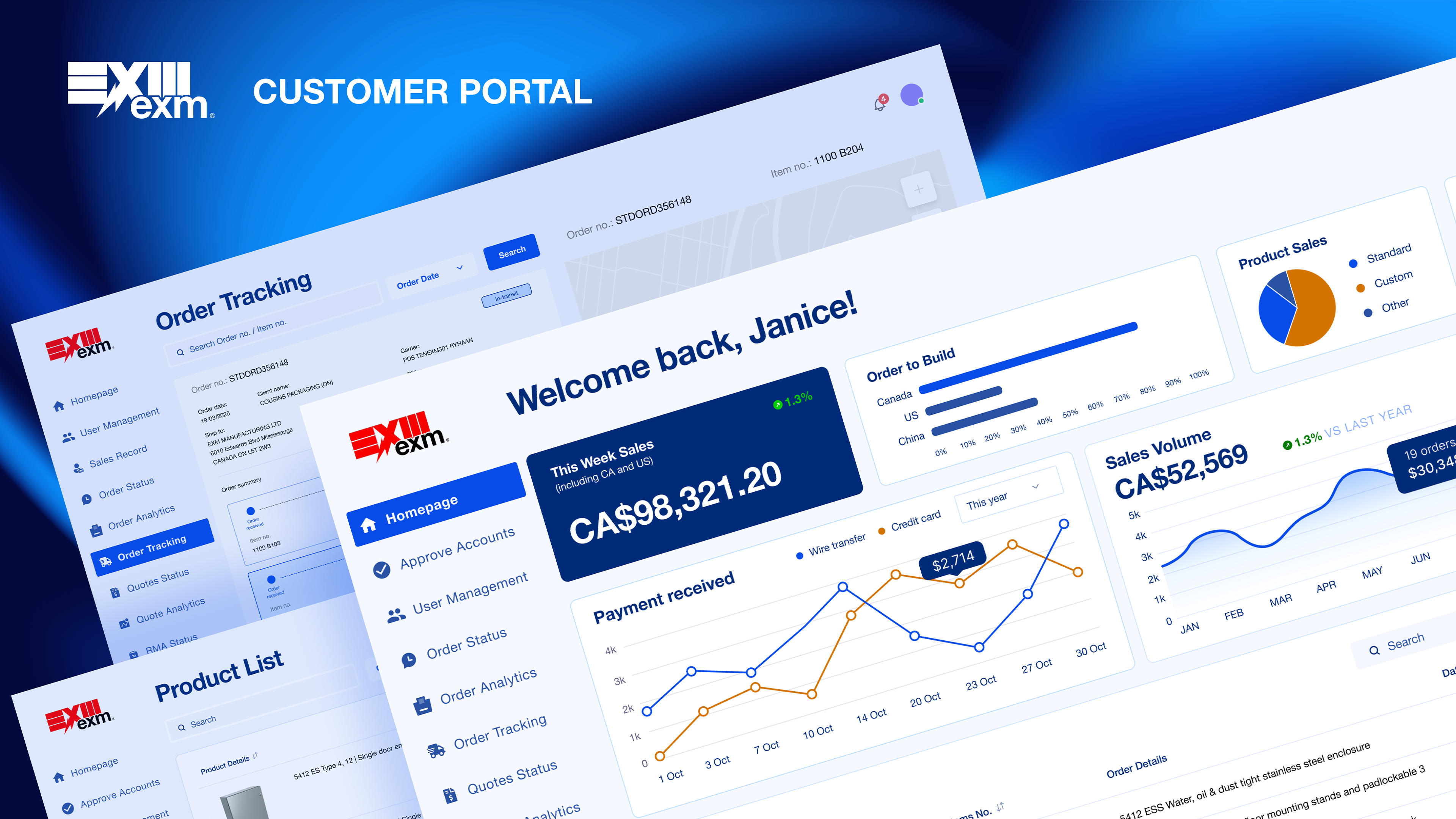
ERP & CRM System
·
Led end-to-end UX/UI design and information architecture for a 4,000+ SKU industrial e-commerce platform serving both B2B and B2C customers
·
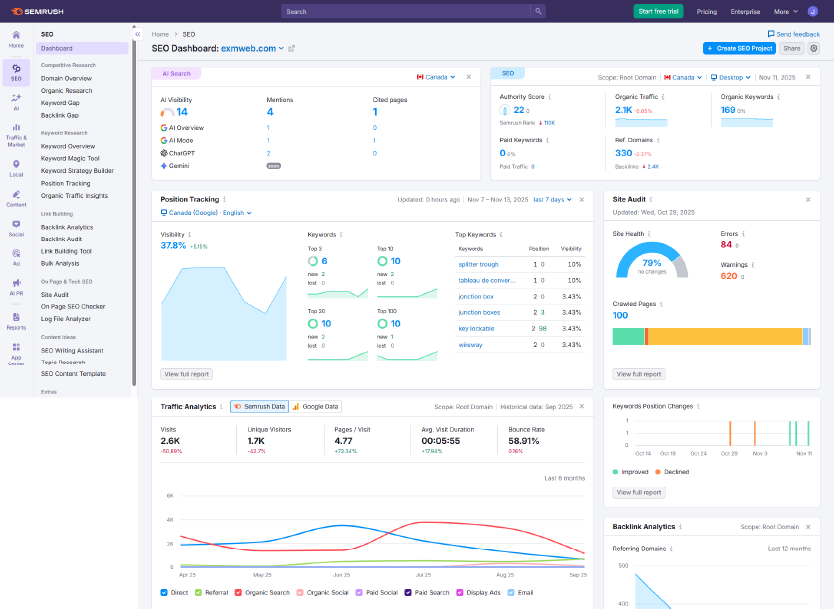
Owned SEO strategy and keyword mapping in collaboration with the developer, driving the site from under 50 keywords to 169 ranked keywords within the first year
·
Designed and maintained the EXM Design System in Figma, covering typography, layout, and interaction patterns across web and internal platforms
·
Produced 3D product visualizations using 3Ds Max, Unreal Engine, and Premiere to replace static product photography
After 50 years in business, EXM had no functioning e-commerce system. B2B buyers were required to call or email for quotes, causing delays and lost sales to competitors who had already moved online.
The existing website had no SEO structure, no keyword targeting, and no analytics — resulting in fewer than 50 ranked keywords and only around $5K CAD in yearly online revenue.
Clients had no way to check stock, compare products, or request quotes without contacting the sales team directly — creating friction for repeat buyers and slowing down the entire purchase cycle.
Results from the first year after launch, within the first year, driven entirely by organic traffic — no paid marketing.
Conversion Rate Increase
Online purchasing launched from zero, generating 189 completed orders in the first year.
Revenue in Year One
The platform drove over CAD $131,000 in sales from 191 purchases, up from $5K annually.
Growth in Active Users
Active users grew to 34K within the first year, reflecting strong organic discovery and repeat visits.
Keywords Ranked
SEO visibility grew from fewer than 50 keywords to 169 ranked keywords, reaching 2.1K monthly organic visits.
Understanding the market and users before touching the design.
Before starting the redesign, I looked at the problem from multiple angles. I analysed how key competitors — Hammond, nVent, and Rittal — structured their e-commerce experience, identifying gaps EXM could own. I reviewed the existing site's analytics to understand where users dropped off, and conducted keyword research to map out the SEO opportunity. On the business side, I spoke directly with the sales and support team to understand the most common customer requests and complaints — which shaped both the information architecture and the self-service features built into the final platform.
Discovery insights from competitor analysis, analytics review, and stakeholder conversations that directly shaped the design decisions.
1
Hammond, Hoffman, and Rittal all offered structured product filtering, clear category navigation, and instant pricing. EXM had none of this, making it impossible for buyers to self-serve. This drove the decision to rebuild the entire information architecture around product discovery and filtering.
2
Sales team conversations revealed that most inquiries were from repeat buyers looking for specific part numbers or competitor equivalents. This directly led to building the cross-reference tool, mapping 10,000+ competitor part numbers to EXM products.
3
Keyword research revealed the existing site ranked for fewer than 50 terms with no metadata structure. Since EXM had no marketing budget, SEO became the primary growth channel — shaping every page template, content hierarchy, and product description format in the redesign.
TO ESTABLISH
a fully functional e-commerce platform from scratch, giving EXM a direct digital sales channel for both B2B distributors and B2C end-users across North America.
TO CONVERT
organic search traffic into real revenue by building SEO-driven product pages, structured metadata, and a frictionless purchase journey — without any paid marketing budget.
TO EMPOWER
customers to self-serve — finding products, comparing specs, requesting quotes, and completing purchases independently without needing to contact the sales team.

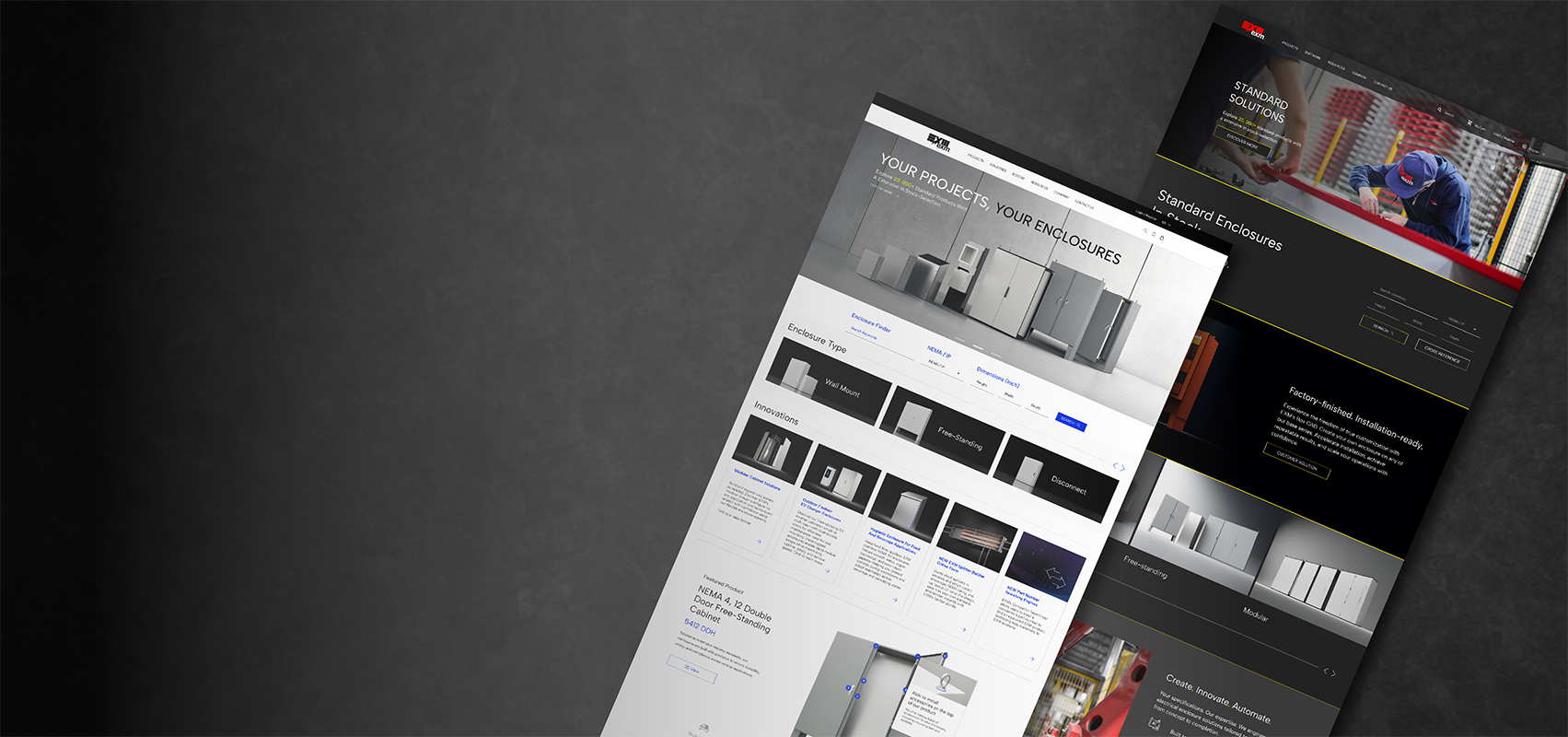
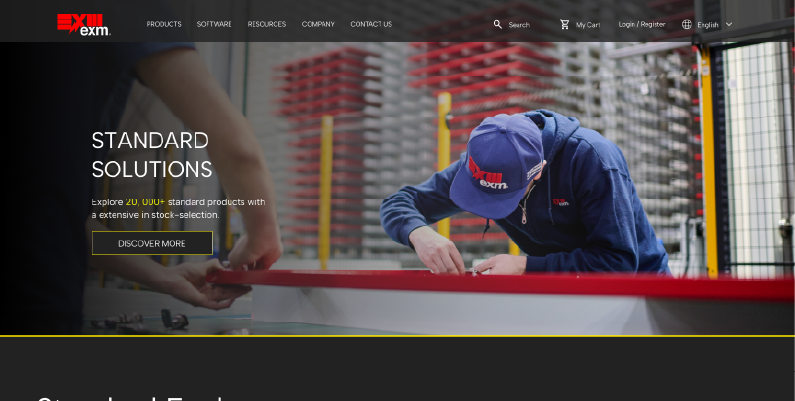
From a static company profile to a full e-commerce platform — three versions, one continuous evolution.
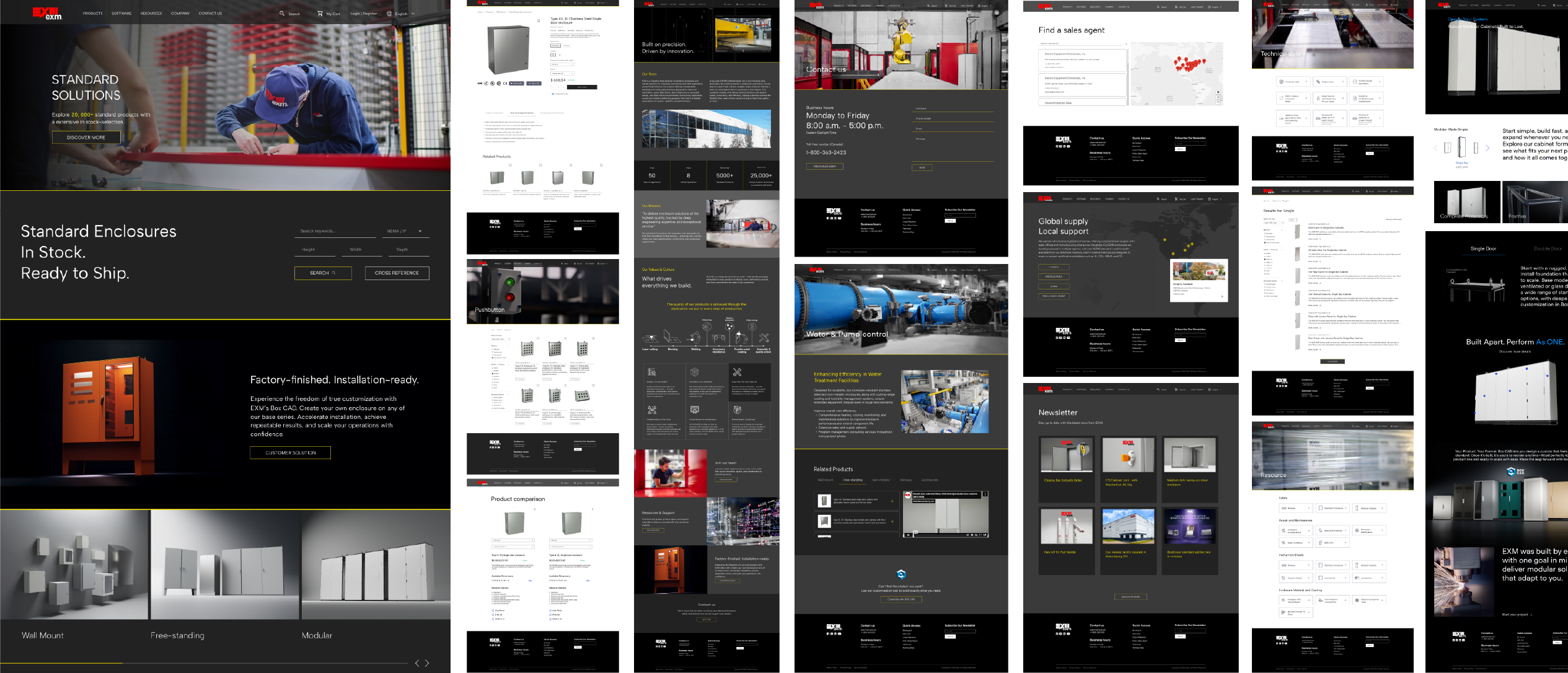
The legacy site functioned as a basic product catalogue with no purchasing capability, weak navigation, and no SEO foundation. When I joined, the priority was clear: build a proper e-commerce experience from the ground up. Version 2 launched with a modern dark-themed interface, structured product hierarchy, and full purchasing functionality. Building on that foundation, Version 3 introduces a grey and yellow industrial aesthetic aligned with EXM's updated brand direction — more refined, more scalable, and ready for international markets.
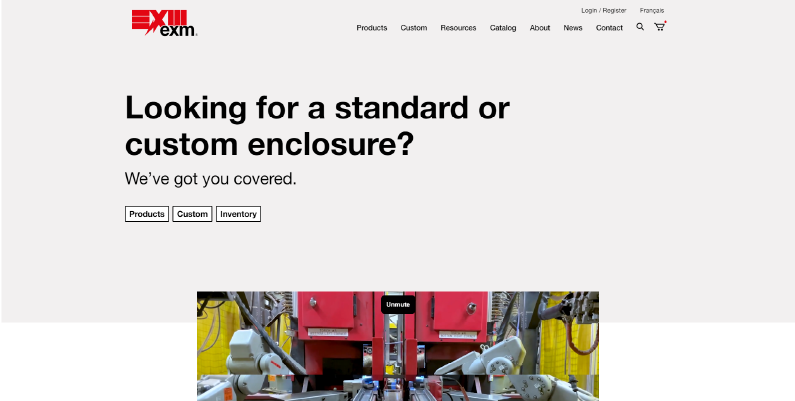
Legacy Version — Oct 2023
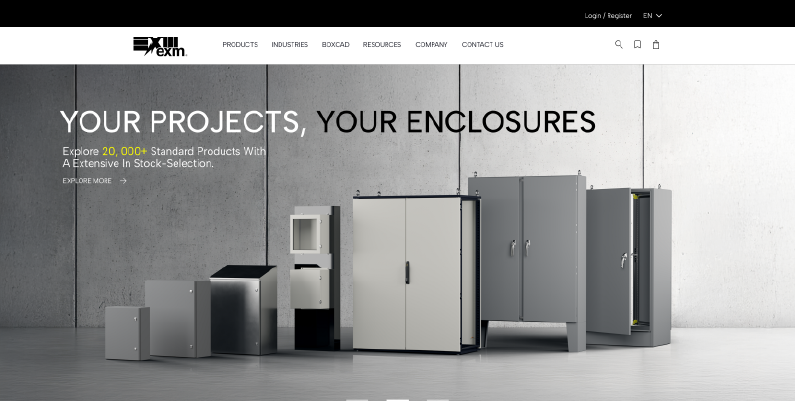
Existing Version — Mar 2024
Updated Version — Mar 2026
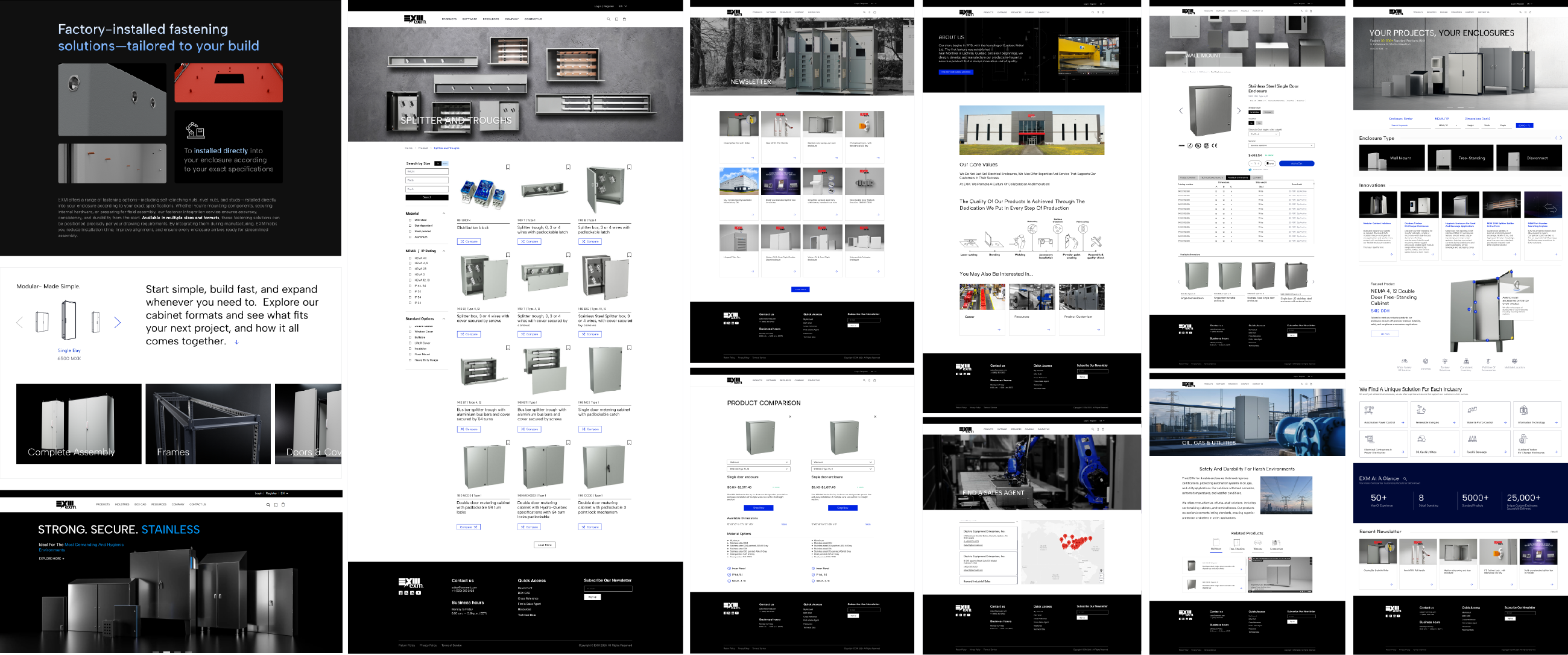
The goal was simple: give buyers everything they need to confidently purchase an industrial product without ever leaving the page or contacting the sales team.The product page became the heart of the platform — a single destination where customers can view 3D animated product explainers, interact with live 3D models via Sketchfab, download technical drawings and STP files, check real-time stock and tier-based pricing pulled directly from Microsoft Dynamics 365, and request a quote or complete a purchase instantly.
Integrated Sketchfab 3D previews and animated product videos, replacing static photos and reducing customer uncertainty before purchase.
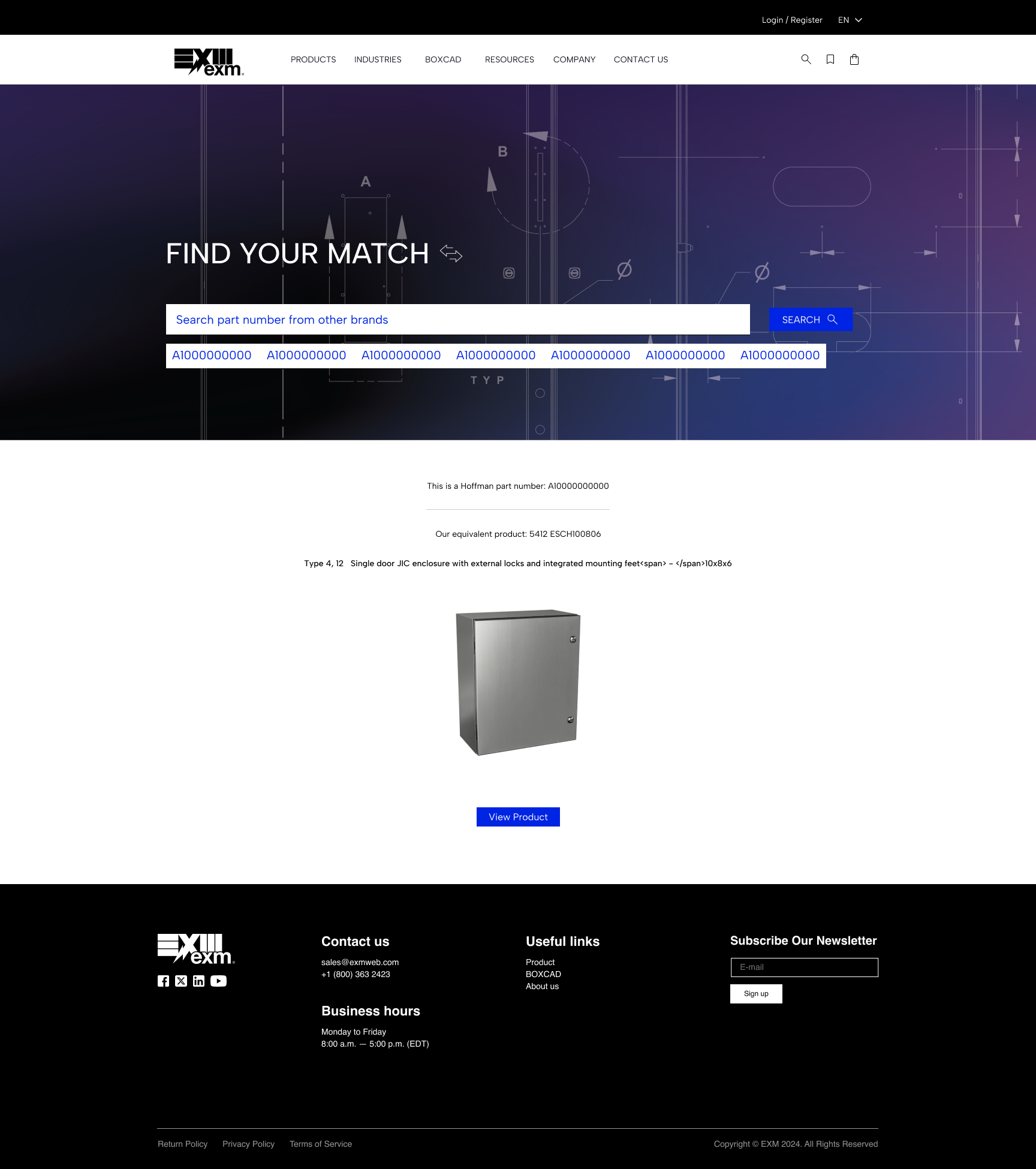
Built a competitor cross-reference tool mapping 10,000+ part numbers, letting buyers search a competitor's code and instantly find the equivalent EXM product.
Connected live ERP data to show real-time stock availability and pricing — reducing cart abandonment by 35%.
Launched a self-service quotation system that cut quote delivery from 2 days to seconds.
Quick Order feature in development — allowing repeat buyers to reorder by part number instantly.

1. One product page, everything included
Designed the product page as a complete self-service hub — combining 3D animated videos, interactive Sketchfab previews, technical drawings, STP file downloads, real-time stock, and live pricing in one place so buyers never need to contact the sales team.
2. Phased launch to validate before scaling
Built a search tool mapping 10,000+ competitor part numbers to EXM equivalents, letting buyers find the right product even when they only know a competitor's code.
3. Live ERP pricing and stock integration
Connected Microsoft Dynamics 365 to surface real-time inventory and tier-based pricing directly on the product page, reducing cart abandonment and speeding up purchase decisions.
4. Self-service quotation system
eplaced the manual email quote process with an instant self-service tool — cutting quote delivery from 2 days to seconds and freeing up the sales team for higher-value work.
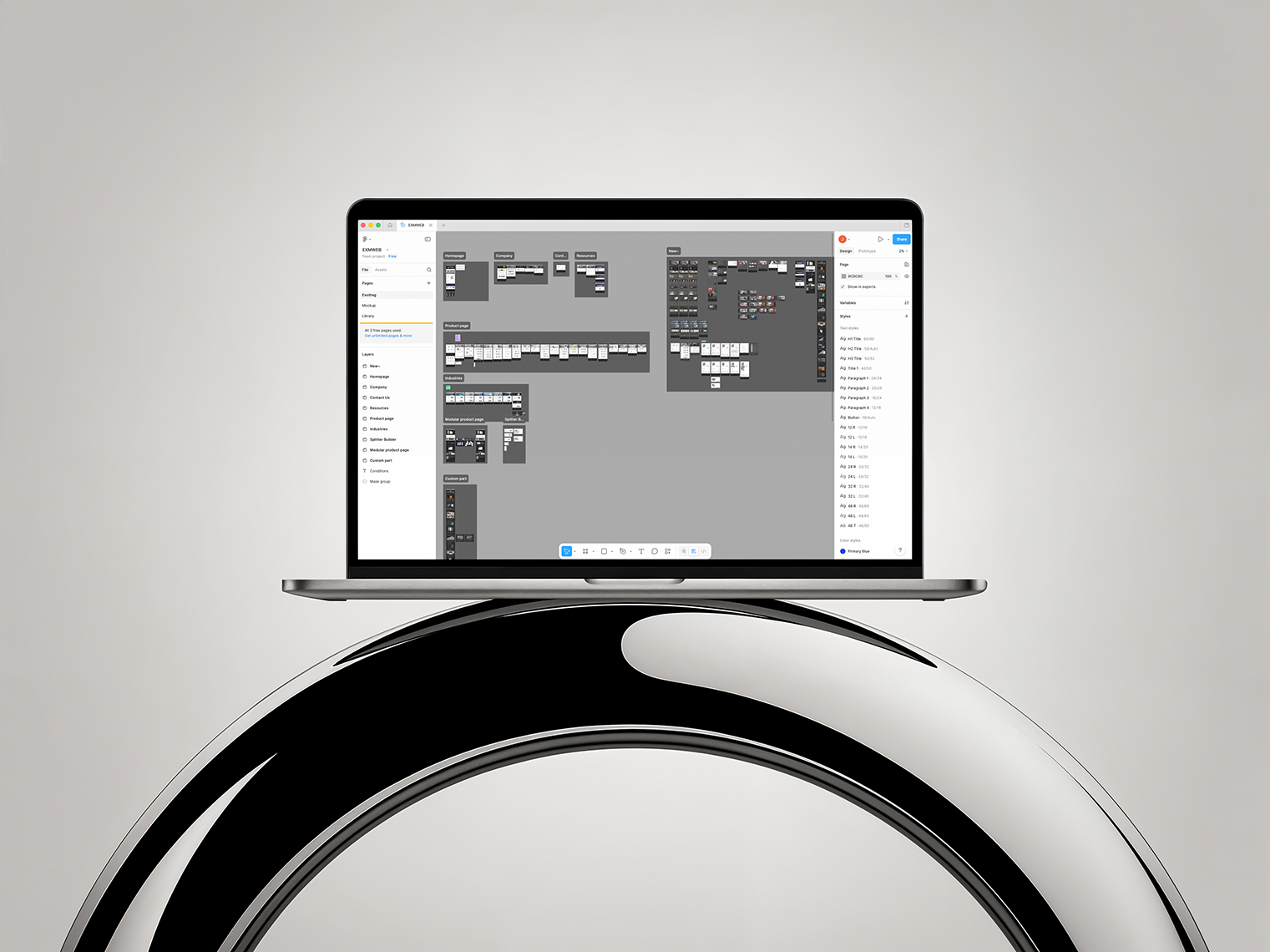
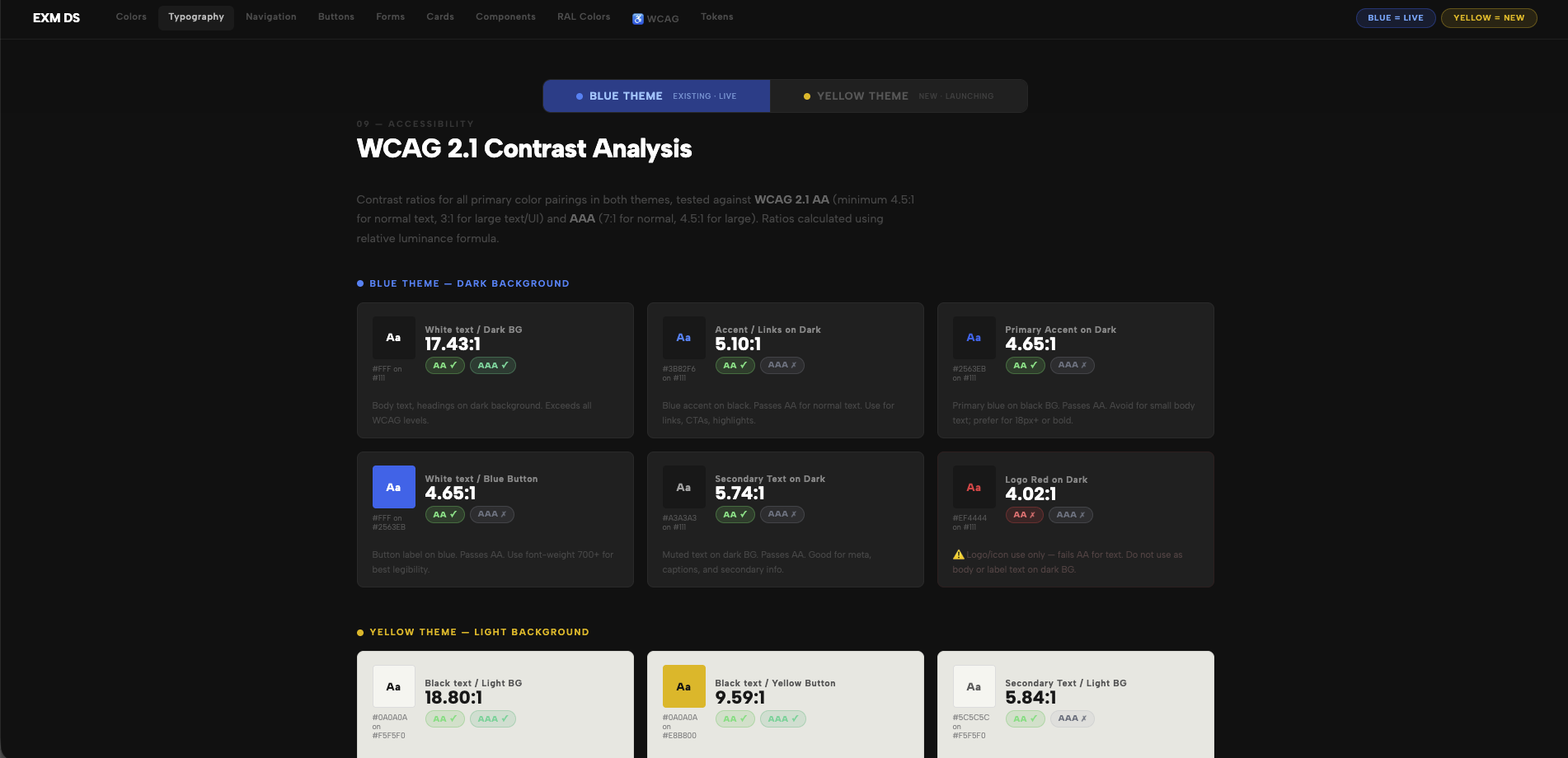
Built in Figma and connected via Claude MCP, the EXM Design System covers typography, color tokens, navigation, buttons, forms, cards, components, RAL colors, and WCAG 2.1 accessibility compliance across both themes. The Blue Theme powers the current live site, while the Yellow Theme is being introduced with Version 3 — shifting the visual language to a more industrial grey and yellow palette that aligns with EXM's updated brand direction. Both themes share the same component structure, making the transition seamless without rebuilding from scratch. The Claude MCP connection enabled design tokens and WCAG AA compliance to be verified and updated directly within Figma, streamlining the handoff between design and development.
With 4,000+ products across dozens of categories, navigation had to do the heavy lifting — guiding buyers to the right product without overwhelming them.
Organized 4,000+ SKUs into clear categories — Industrial, Commercial, Climate Control, and Accessories — so buyers can navigate by product type rather than scrolling through an unstructured list.
Added an Industries section linking directly to relevant product collections, helping buyers find enclosures suited to their specific sector — from Food & Beverage to Renewable Energies.
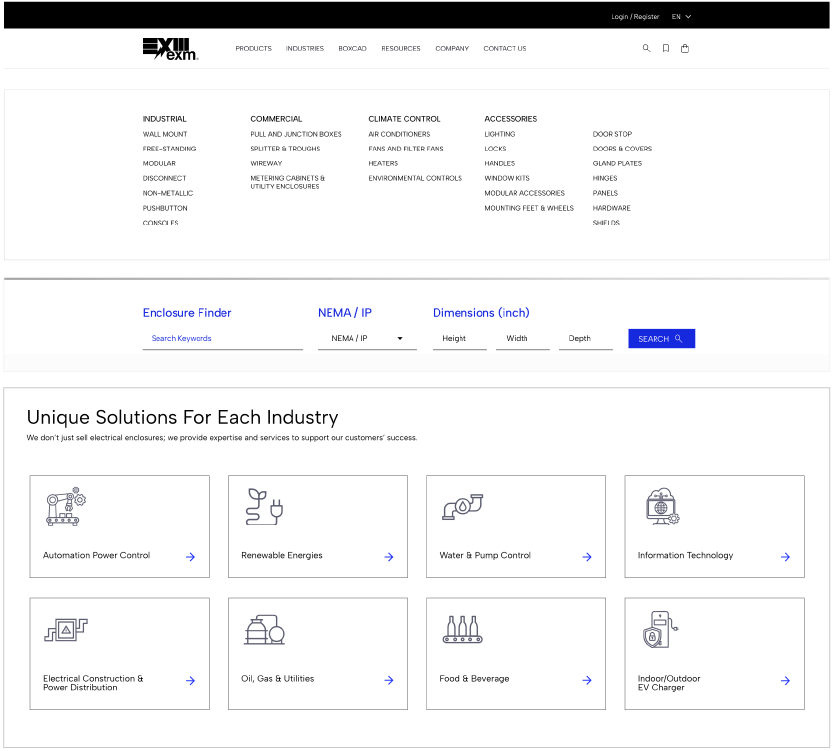
Surfaced key tools — Cross Reference, Splitter Builder, BOX CAD — directly in the menu, giving power users instant access without hunting through the site.
Added a NEMA/IP and dimension-based search widget on the homepage, letting buyers filter to the right enclosure in seconds without browsing categories manually.
Complete Product Page
A single destination combining 3D visualizations, technical specs, available dimensions, live pricing, stock availability, and file downloads — all without contacting sales.
Competitor Cross-Reference Tool
Search any competitor part number and instantly find the equivalent EXM product, with side-by-side specs and pricing.
Splitter Builder
A self-service configurator that lets buyers quote and customize splitter products online, generating instant pricing without sales involvement.
BOX CAD
Free software for designing custom enclosures, integrated directly into the platform for engineers and contractors.
Enclosure Finder
A NEMA/IP and dimension-based search widget on the homepage, helping buyers filter to the right product in seconds.
Real-Time ERP Pricing & Stock
A NEMA/IP and dimension-based search widget on the homepage, helping buyers filter to the right product in seconds.
Real-Time ERP Pricing & Stock
Live inventory and tier-based pricing pulled directly from Microsoft Dynamics 365, displayed on every product page.
PROBLEM
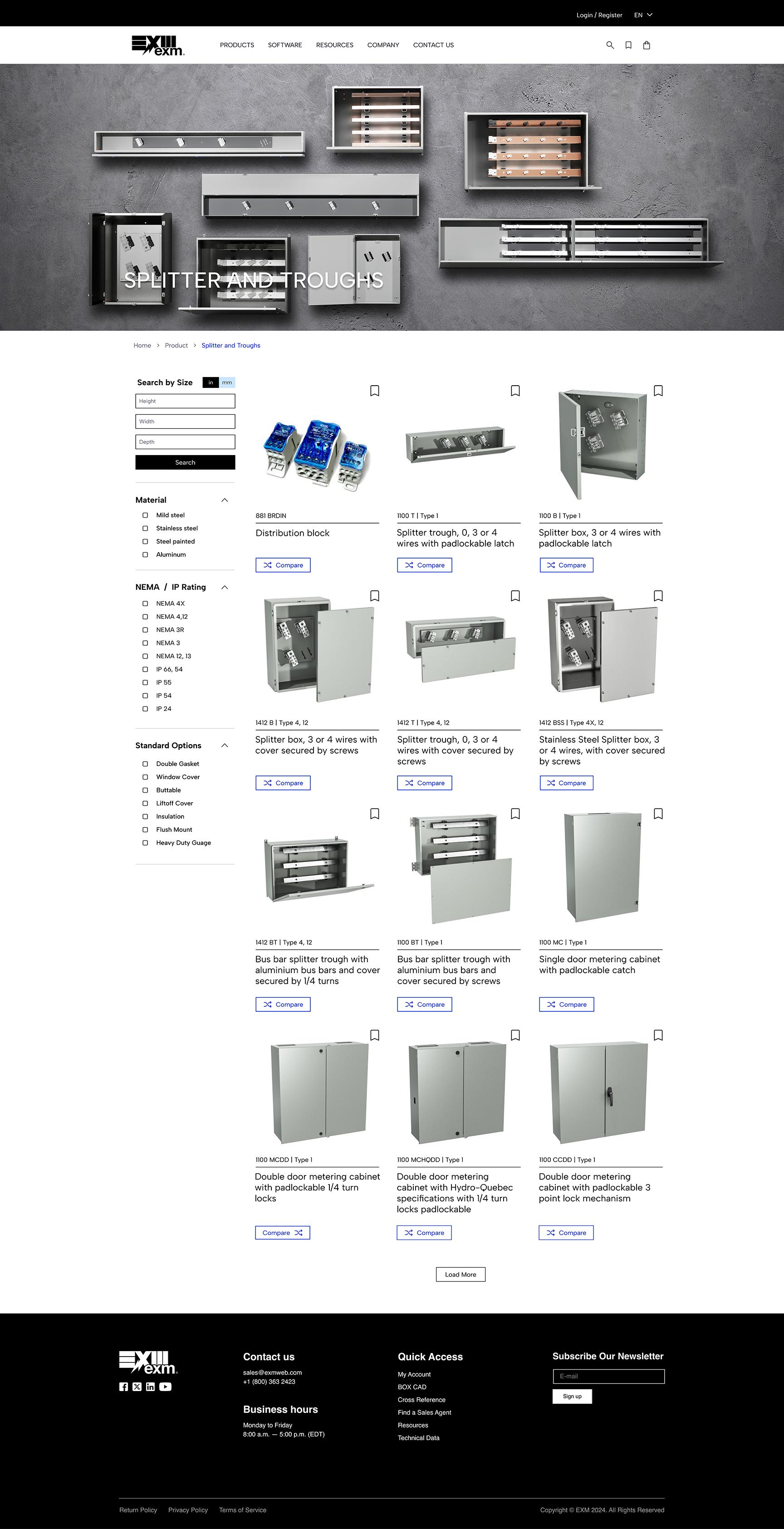
EXM had over 4,000 SKUs across dozens of product types, materials, ratings, and dimensions — with no consistent structure or taxonomy. Buyers had no reliable way to filter, compare, or navigate to the right product, and the old site offered no meaningful categorization beyond a basic product list.
Design Decision
I built a full product taxonomy from scratch — organizing products into clear parent categories (Industrial, Commercial, Climate Control, Accessories), sub-categories by product type, and filterable attributes including NEMA/IP rating, material, and dimensions. This structure powered the mega menu, the Enclosure Finder widget, and every product listing page, ensuring buyers could find the right product whether they were browsing by category or filtering by spec.
Outcome
The structured taxonomy directly contributed to 169 ranked keywords and 2.1K monthly organic visits within the first year — search engines could now properly index and surface individual product pages. Buyers went from calling sales to self-serving online, resulting in 189 completed orders and over CAD $131,000 in revenue in year one.
1
SEO and UX are not separate disciplines — every information architecture decision I made directly affected how search engines indexed the site. Designing for users and designing for discoverability turned out to be the same thing.
2
Building a product from zero taught me that the hardest design work isn't the visual layer — it's the structure underneath. Getting the product taxonomy and navigation right before designing a single page made everything else faster and more consistent.
3
Seeing real revenue numbers tied to design decisions changed how I think about impact. When $131K in sales comes entirely from organic traffic, every page template, every filter, and every product description becomes a business decision, not just a design one.
1
SEO and UX are not separate disciplines — every information architecture decision I made directly affected how search engines indexed the site. Designing for users and designing for discoverability turned out to be the same thing.
2
Building a product from zero taught me that the hardest design work isn't the visual layer — it's the structure underneath. Getting the product taxonomy and navigation right before designing a single page made everything else faster and more consistent.
3
Seeing real revenue numbers tied to design decisions changed how I think about impact. When $131K in sales comes entirely from organic traffic, every page template, every filter, and every product description becomes a business decision, not just a design one.